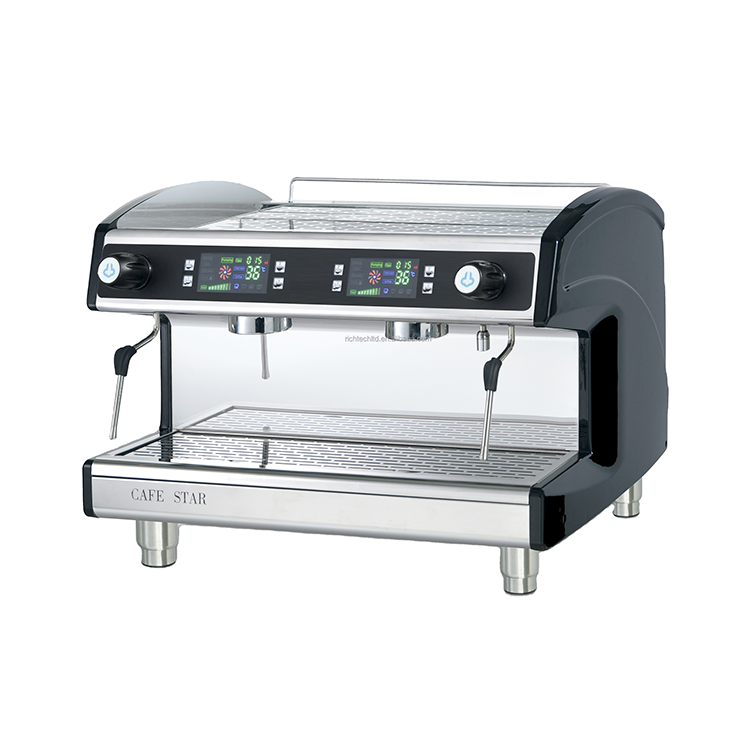
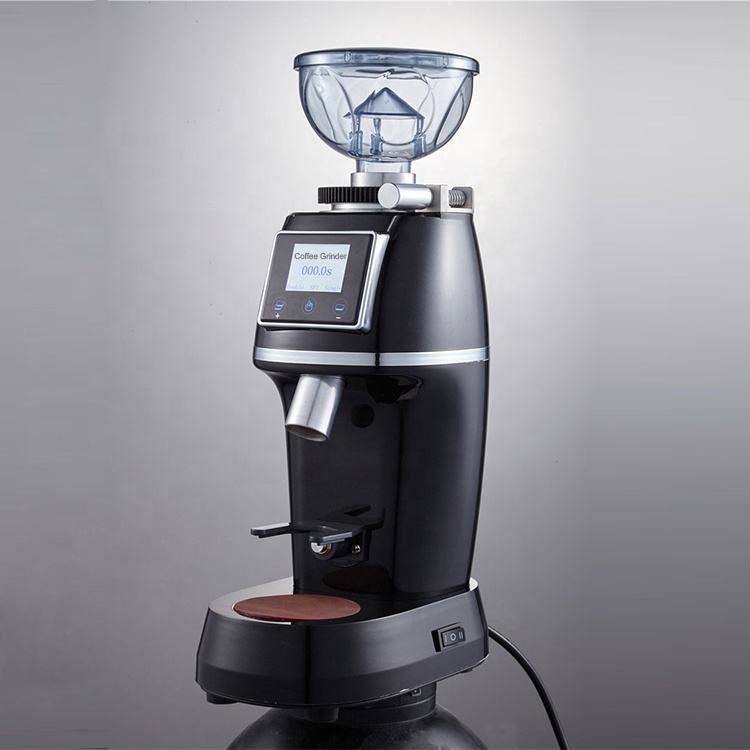
Espresso machine, coffee grinder and water as a single workflow.
The scenarios below are PRECISION ROAST targets, not mandatory standards or specifications for specific models.
WORKFLOW / GROUPS
PAR/BOILERS
WATER/ELECTRICITY
01/scenarios
From volume to work system
Ranges help to start calculation, but do not replace peak measurement, menu check and passport of a particular model.
Planned scenarios for the configuration of the coffee shop
Volume
Espresso machine
The main coffee grinder
Second coffee grinder
Water
up to 100 cups/daySuitable only at a quiet peak and one work post.
1 group or compact 2 groups after peak check
espresso grinder
by menu: decaf / second grade
water analysis + machine requirements
100–250 cups/dayConfirm the number of groups by timing the short peak interval.
2 groups as a planned hypothesis
main grinder at peak dose
recommended for two classes or reserve
Direct connection and controlled filtration
250-500 cups/dayMilk and milk are often more important than the third group.
2 or 3 groups of conflict operations
espresso grinder
second working grinder to split the flow
project on the flow and quality of source water
500+ cups/dayDo not choose a class without timekeeping, test and engineering project.
individual high-volume scenario
a few working coffee grinders on the menu
reserve and division of varieties are mandatory for evaluation
calculation project with resource monitoring
02/VERIFIABLE SET
Link the script to real listings
The four ranges above remain editorial guidelines: ≤100, 100-250, 250-500 and 500+ cups per day, and the listings below provide baseline data for validation, but do not replace peak, water, electrics and rack analysis.
Basic equipment setupRequired
01
Espresso machine
Three published classes to reconcile a calm, medium and complex peak scenario, the number of groups selected after timekeeping, not just by cups per day.
Disclosure. Showing 4 key fields from the source listing; these are supplier statements, not independent test results.
Not specified. Peak output
Espresso machines
Basic equipment setupRequired
02
Main and backup coffee grinder
Commercial espresso grinder listings to check the main position and second grade: retention, dose and heating are confirmed by a test on the selected coffee.
Disclosure. Showing 4 key fields from the source listing; these are supplier statements, not independent test results.
Not specified. Throughput
Conflict. A listing field says Grinding capacity of espresso coffee: 800 KG without a time basis or test definition; it was not used as throughput. The dimension value has no unit in the retrieved structured attribute, so no unit was inferred.
Coffee grinders
02/system
Agreed flow before order
01
Start with the menu
The number of drinks, milk share, size and range determine the workflow.
coffee
decaf and second grade
alternative milk
02
Confirm the work stand
Arrange the car, coffee grinder, tamping, milk, washing and dispensing without intersection of operations.
millimetre
service gap
movement
03
Prepare for engineering
Check the power, water, drain, filtration, ventilation and load-bearing capacity before ordering.
specification of each model
water-test
point-of-point
01CATALOGUE/SUPPLIER DATA
Espresso machines with checked sources
Filters work locally and do not create indexable URLs. Match group, automation, power and supplier.
03/RESULTFound: 22Showing 6 of 22
01
Loading image
Loading image
SOURCE CHECKED · August 10, 2026
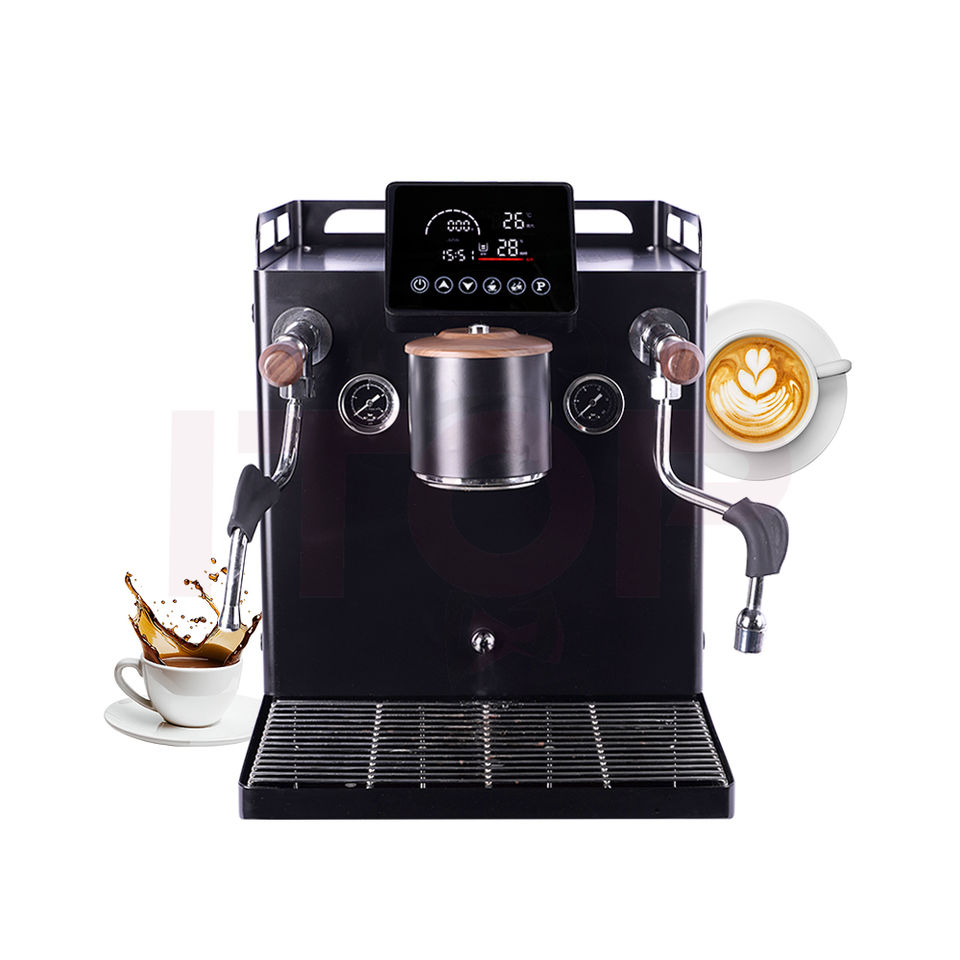
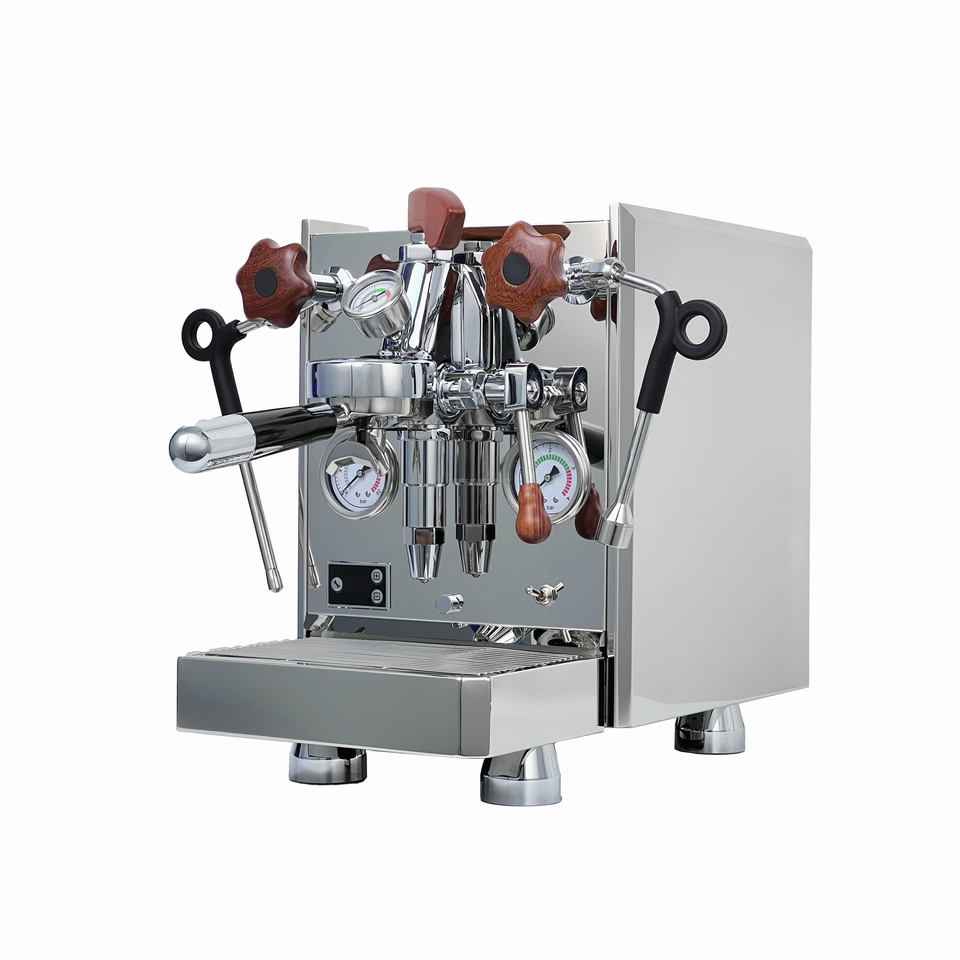
Commercial Rotary Pump Coffee Machine — Single Group 9 Bar Dual Boiler 3200 W
Model
CMSM3000B
Supplier
Guangzhou Itop Kitchen Equipment Co., Ltd.
Type of seller
Multispecialty Supplier
Suitable applications
Compact rack with one working position; the actual pace must be confirmed by a menu and steam load test.
Editorial reference point PRECISION ROAST, not the manufacturer's statement.
Groups / format
1 · traditional
Automation
Semi-automatic
Voltage
110–220 V / 50–60 Hz
Power
3200 W / 14.7 A
Boiler
1 L + 4 L (the listing does not map each volume to coffee or steam)
There are discrepancies in the listingThe listing labels 'Steam 5 liters + Coffee 1 liter' as Water Tank Capacity rather than explicitly as boiler capacity; these values were not normalized into boiler fields.
There are discrepancies in the listingThe product title says dual boilers, while the structured specification identifies one 2 L heat-exchanger boiler. The key attributes say connecting tap water, while supplier copy says either direct water or a 1.8 L removable tank.
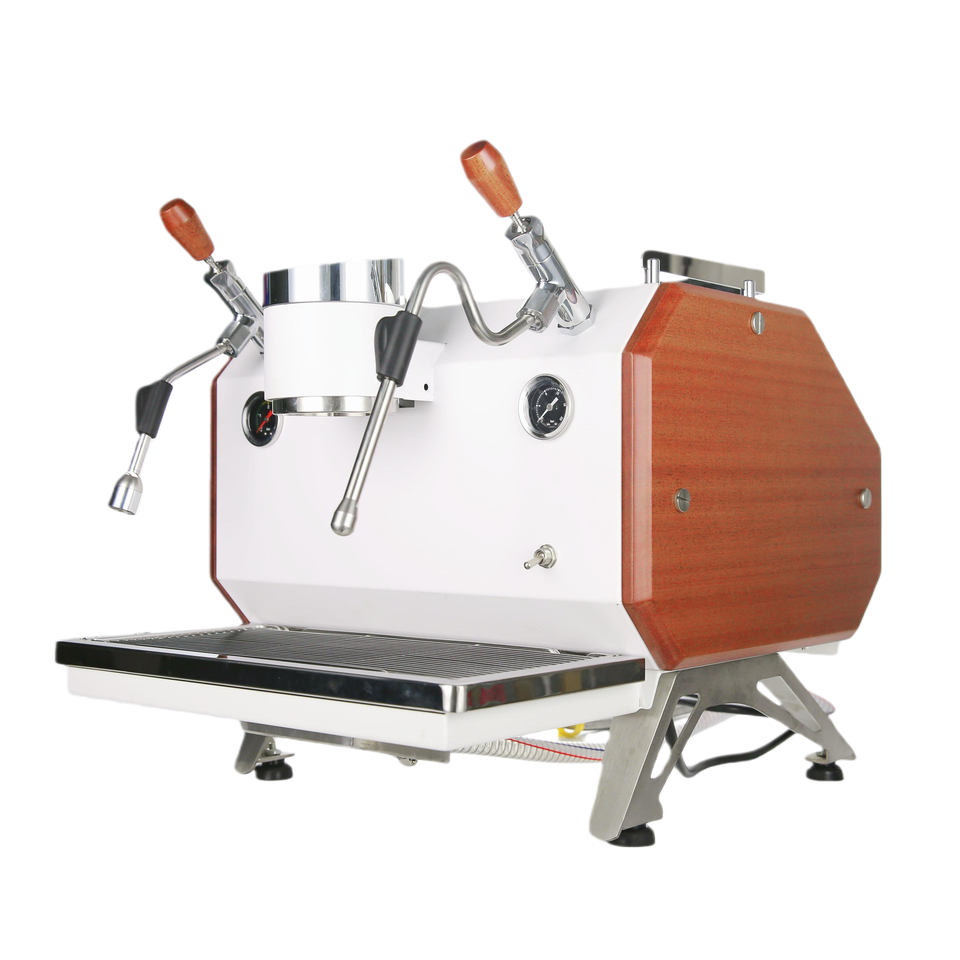
Double Boiler Rotary Pump Single Group Commercial Espresso Coffee Machine
Model
SWF-G3
Supplier
Wuxi SWF Intelligent Technology Co., Ltd.
Type of seller
Multispecialty Supplier
Suitable applications
Compact rack with one working position; the actual pace must be confirmed by a menu and steam load test.
Editorial reference point PRECISION ROAST, not the manufacturer's statement.
Groups / format
1 · traditional
Automation
Semi-automatic
Voltage
220 V
Power
2550 W
Boiler
Coffee boiler 2 L; supplier specification states three boilers
Steam boiler
3.8 L mother-child steam boiler
Pump
Imported commercial rotary pump
Water connection
Tap-water supply and drainage
Throughput
Not specified by the supplier
Dimensions
560 × 510 × 470 mm
Weight
Gross 47 kg
MOQ
2 sets
Claimed price at the time of inspection
US$1,750 (2–99 sets); US$1,300 (100+ sets) USD
August 10, 2026
There are discrepancies in the listingTop-level attributes report a 1.1 L water tank and 20 bar pressure, while the supplier specification describes a plumbed three-boiler platform with a commercial rotary pump. The title says double boiler, but the detailed supplier table says three boilers. The listing mixes commercial applications with home-enthusiast copy.
There are discrepancies in the listingThe source places the value 11 L under both Water Tank Capacity and capacity (cup); it was not relabeled as boiler capacity. The title says Automatic Latte/Cappuccino while the structured Control Mode says Semi-Automatic Control; the structured control field was retained.
There are discrepancies in the listingThe broad Alibaba application taxonomy includes household and garage use even though the structured product name is Commercial Electric Coffee Grinder and the listing specifies 83 mm burrs, 600 W power and 7–10 g/s grinding efficiency.
There are discrepancies in the listingThe structured model field shows CGFL250 while the supplier's Product Model field shows CGF-L250; the supplier-formatted model is retained and both forms are noted. The title says commercial while the marketplace application taxonomy also includes household, vehicle and outdoor contexts. Only package gross weight is exposed; it is not treated as machine net weight.
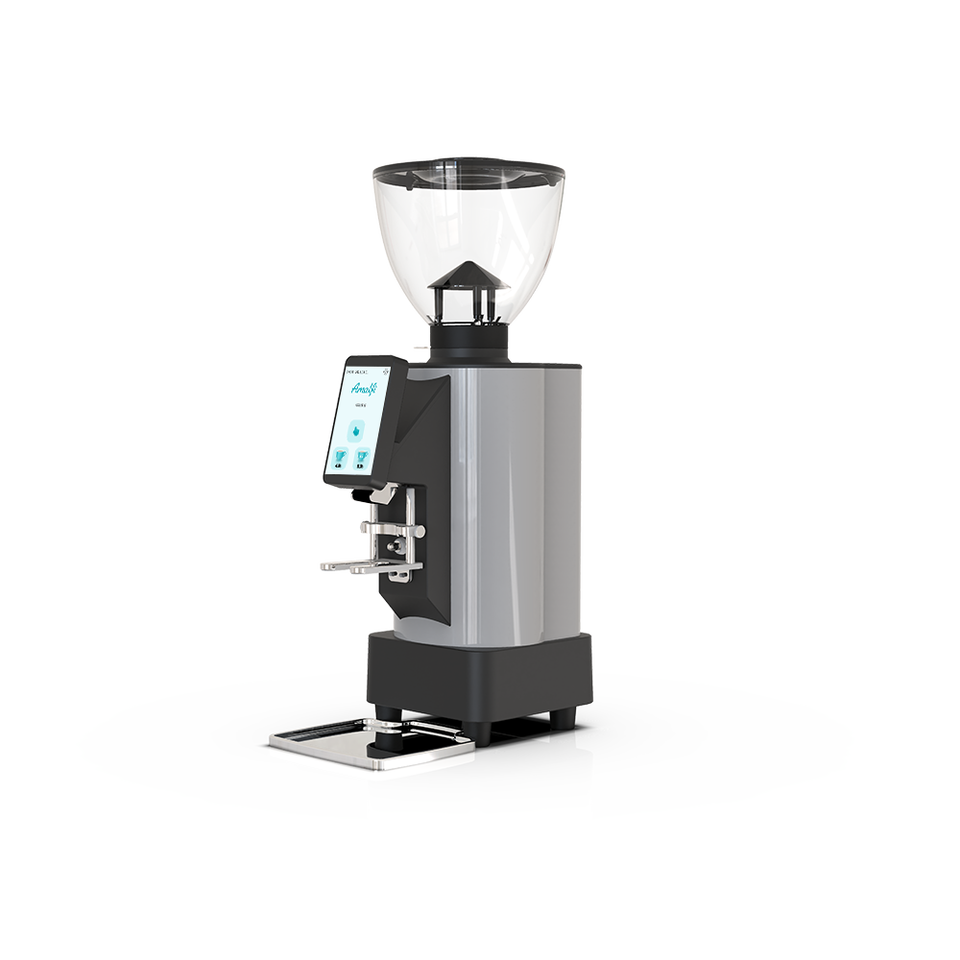
K92 83 mm Titanium-Coated Flat Burr Commercial Espresso Grinder
Model
K92
Supplier
Jiangsu Amalfi Machinery Equipment Co., Ltd.
Type of seller
Not specified
Suitable applications
Candidate for espresso direction; dosing stability and working pace must be confirmed by a test on your grain.
Editorial guideline PRECISION ROAST based only on said application; not manufacturer's statement.
Application
Espresso
Source applications
Commercial; supplier name field says Speed Adjustable Electric Coffee Grinder Commercial Espresso Mill
Burr type
Flat
Burrs at source
Titanium-coated flat burr, stated in the title
Diameter of burrs
83 mm
Throughput
Not specified
Speed of rotation
Not specified
Motor power
420 W
Voltage
220 V
Hopper
850 g stated in listing metadata
Grinding range
10-step upper-burr adjustment stated in listing metadata
Dimensions
19 × 30 × 59; unit not stated in the retrieved attribute
Weight
11 kg machine weight; single-package gross 14.5 kg
MOQ
10 sets
Type of price
Based on order quantity
Claimed price at the time of inspection
£378.45 (10–49 sets); £355.75 (50+) GBP
August 10, 2026
There are discrepancies in the listingA listing field says Grinding capacity of espresso coffee: 800 KG without a time basis or test definition; it was not used as throughput. The dimension value has no unit in the retrieved structured attribute, so no unit was inferred.
There are discrepancies in the listingThe title uses the market term DF64 although the listing identifies model YS-026 with a 60 mm conical burr; no 64 mm burr is claimed in the structured attributes. Structured Capacity says 240 g while the supplier's Beans-house Volume field offers 250 g and 500 g hopper variants. The commercial title is accompanied by a broad application taxonomy that includes household, car and RV.
New Arrival Variable Speed Flat Burr Semi-automatic Commercial Coffee Grinder Electric Coffee Mill
Model
A85
Supplier
Jiangsu Amalfi Machinery Equipment Co., Ltd.
Type of seller
Not specified
Suitable applications
Candidate for espresso direction; dosing stability and working pace must be confirmed by a test on your grain.
Editorial guideline PRECISION ROAST based only on said application; not manufacturer's statement.
Application
Espresso
Source applications
Coffee shop, office coffee room, hotel and restaurant espresso/service grinding.
Burr type
Flat
Burrs at source
Flat burr
Diameter of burrs
74 mm
Throughput
16 g in 2.6 seconds stated for a double dose; not normalized to kg/h
Speed of rotation
Not specified
Motor power
Not specified
Voltage
220 V
Hopper
1000 g
Grinding range
12 stepped fineness settings; supplier also states four operating modes
Dimensions
230 × 400 × 600 mm
Weight
Not specified
MOQ
50 sets
Type of price
fixed
Claimed price at the time of inspection
US$458 USD
August 10, 2026
There are discrepancies in the listingStructured attributes say stainless-steel burr material, while the supplier detail says titanium. The material is not normalized. The page labels the model A85 but the supplier description calls the grinder an upgrade from 64 mm to 74 mm; 74 mm is retained as the current stated burr diameter. 14.4–14.5 kg is shown as gross/package weight, so product net weight remains null.
Use the range only as a start. The result is determined by the peak, menu, command and size of the rack.
Do I need a second coffee grinder?+
It is useful for second-rate, decaf, flow sharing or reserve, but the solution depends on the menu and budget.
Can I order the equipment before analyzing the water?+
This increases the risk of incorrect filtration and warranty issues, and the analysis and requirements of the machine are better coordinated in advance.
First the workflow, then the specific model
Record the peak, menu, water, power and dimensions, then request the current specification.