Optical, or color, sorting recognizes visible differences. Mechanical calibration divides the flow by size. These are different tasks that sometimes require two consecutive machines.
Choose equipment from product stage and measurable defect, not from the general word "sorting." For green and roasted coffee, there are differences in permissible losses, serving, contamination and place in the process. Performance is checked along with selection quality and false marriage, and cameras, sensors, compressed air, cleaning and line interfaces are fixed in the specification.
FEED / SINGLE LAYER
SENSOR OR SCREEN
REJECTS / SIZE GRADES
02/workflow
Check the flow from the input batch to each particle fraction
01fill out
02target
03distinguish
04separate
05measure output and loss
03/engineering
Stage, principle, quality of selection and full integration
01
Separate green and roasted coffee
Green coffee is sorted to roast to prepare a more homogeneous batch and remove predetermined defects or impurities. Roasted coffee is tested after cooling, taking into account the fragility of the grain, oils, dust and proximity of the packaging site. Application for use at one stage cannot be automatically transferred to another.
stage
condition and temperature
usefulness
02
Optical sorting means color
In the catalog, the terms "optical sorter" and "color sorter" are used as names for the same class: cameras or other sensors observe individual particles, the algorithm matches the signal with the setting, and the selection system outputs the marked material from the main stream.
lighting and sensors
camera
selection
03
Screen calibrated by size mechanically
A sieve size graders splits the grain through the holes of a given geometry, and the result is determined by the configuration of the sieve, the number of decks, the feed, and the actual distribution of the batch by size, and it doesn't evaluate color, and it doesn't promise to remove a defect that's invisible to the sieve.
hole size
number
uniformity
04
Consider false marriage with productivity
The maximum flow without the quality criterion does not describe the useful work. On the test, the input, the received product and the rejects are weighed, then the missed defects and the suitable grain in the waste are checked, the setting is repeated on several representative batches, not only on the prepared demonstration sample.
kg/h at the specified quality
defectiveness
corn-selection
05
Check air, cameras and surveillance conditions
Pneumatic selection requires pressure, flow rate, quality and stability of compressed air. The optical part requires clean windows, stable lighting and access to calibration. Ask not only the name of the sensor or camera, but also the procedure for checking the result after changing the recipe.
air pressure
optic
standard
06
Lay down cleaning, maintenance and integration
Bunker supply path, sieve, optical windows and break should be available without dangerous disassembly. Before order, agree on the heights of entry and exit, aspiration, power, air, storage tanks, lock signals and safe route of rejected material.
access
communication and blocking
cross-batch
04A/comparison
Color or size
Comparison of optical sorter and mechanical size graders.
The catalogue is based on available vendor listings on the marketplace; the model name and original wording are saved for re-checking.
02
Unknown fields
If the coffee stage, performance, camera, air or configuration of the sieve is not disclosed, the value remains unknown and is not recovered by a similar machine.
03
Editorial boundary
The filter creates a list of candidates, but does not confirm the result on your batch, the final values are obtained by testing and the written specification of the supplier.
01CATALOGUE/SUPPLIER DATA
Complete catalogue of sorting equipment
The filters work according to the approved principle, the coffee stage, the criterion, the performance and the supplier, unknown characteristics remain unknown until the supplier's response and testing.
03/RESULTFound: 18Showing 6 of 18
01
Loading image
Loading image
SOURCE CHECKED · August 13, 2026
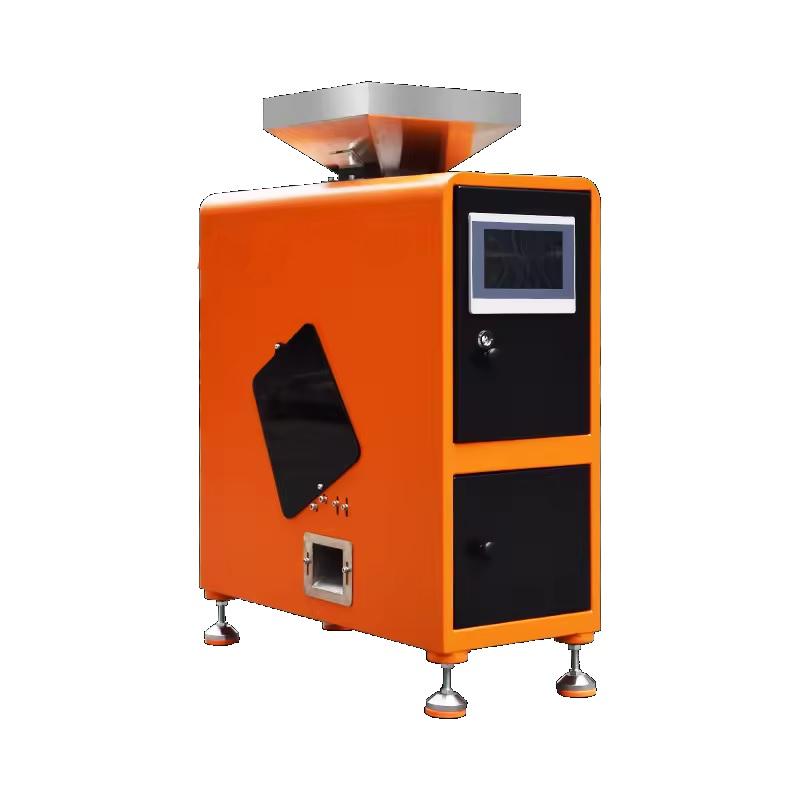
RealTech Q16 Small Green and Roasted Coffee Bean Color Sorter
Model
Q16
Supplier
Anhui Realtech Machinery Company Limited
Type of seller
Not specified
Suitable applications
An editorial candidate for optical: green coffee · roasted coffee by criteria: colour. Before selecting it, verify actual throughput, sorting quality and losses using your batch.
Editorial guideline PRECISION ROAST, compiled only according to the approved principle, the stage of coffee and the criteria for use; not the manufacturer's statement.
The principle of sorting
Optical
Principle at source
color
Coffee stage
Green coffee · Roasted coffee
Stage at source
green coffee beans, roasted coffee beans
Sorting criteria
Colour
Criteria at source
color
Throughput
20–150 kg/h
Sensor technology
Japan Toshiba CCD sensor
Camera
CCD
Channels / chutes
16
Screen configuration
Not specified
Number of screens
Not specified
Output size grades
Not specified
System of rejection
Not specified
Precision
≥99.9%
Feed type
Not specified
Air requirements
0.5-0.8 (unit not stated)
Power
0.3 kW
Voltage
110 V or 220 V
Dimensions
712 x 314 x 847 mm
Weight
70 kg
Operators
Not specified
MOQ
1 set
Type of price
range
Evidence note
The localized direct card explicitly lists both green and roasted coffee beans as raw material, with coffee-bean color sorting as the application. The exact RealTech Q16 supplier-listing image was matched by model, title, supplier context and Alibaba product ID on 2026-08-13; rights remain unverified and the site links back to the exact listing. Certifications stated by supplier: CE.
Declared range at the time of verification
₹446,768.98 for 1-4 sets; ₹381,347.49 for 5 or more sets.
August 13, 2026
Supplier source: Anhui Realtech Machinery Company Limited
A candidate for optical is documented, but the normalized data does not specify the coffee stage. Request a test using your product and written confirmation of the application by criteria: colour.
Editorial guideline PRECISION ROAST, compiled only according to the approved principle, the stage of coffee and the criteria for use; not the manufacturer's statement.
The principle of sorting
Optical
Principle at source
color
Coffee stage
Not specified
Stage at source
coffee beans, mung beans, white beans, charlock, mustard
Sorting criteria
Colour
Criteria at source
color
Throughput
300–500 kg/h
Sensor technology
Toshiba CCD sensor
Camera
CCD cameras with LED lighting
Channels / chutes
32
Screen configuration
Not specified
Number of screens
Not specified
Output size grades
Not specified
System of rejection
Not specified
Precision
99.99% (another direct field states ≥99.9%)
Feed type
Not specified
Air requirements
0.6-0.8 MPa
Power
500 W
Voltage
220 V, 50 Hz
Dimensions
460 x 895 x 1356 mm
Weight
180 kg
Operators
Not specified
MOQ
1 set
Type of price
range
Evidence note
The localized direct title and raw-material field explicitly identify coffee beans. Capacity was converted from 0.3-0.5 T/H. The two accuracy statements are compatible lower-bound/detail forms and are preserved together. Image URLs were not retained; image rights were not assessed. Certifications stated by supplier: CE.
Declared range at the time of verification
US$4,950 for 1-2 sets; US$4,770 for 3-4; US$4,500 for 5 or more.
PinYang PY-Q16 Mini Roasted Coffee Bean Color Sorter
Model
PY-Q16
Supplier
Hubei Pinyang Technology Co., Ltd.
Type of seller
Custom Manufacturer
Suitable applications
An editorial candidate for optical: roasted coffee by criteria: colour. Before selecting it, verify actual throughput, sorting quality and losses using your batch.
Editorial guideline PRECISION ROAST, compiled only according to the approved principle, the stage of coffee and the criteria for use; not the manufacturer's statement.
The title explicitly names roasted coffee beans, and the card lists coffee beans as raw material. Capacity was converted from 0.15-0.25 T/H to 150-250 kg/h. Image URLs were not retained; image rights were not assessed.
Declared range at the time of verification
£3,370.12 for 1-9 sets; £3,145.45 for 10 or more sets.
A candidate for sieve-type is documented, but the normalized data does not specify the coffee stage. Request a test using your product and written confirmation of the application by criteria: size.
Editorial guideline PRECISION ROAST, compiled only according to the approved principle, the stage of coffee and the criteria for use; not the manufacturer's statement.
The principle of sorting
Screen-based
Principle at source
size
Coffee stage
Not specified
Stage at source
coffee beans, nuts
Sorting criteria
Size
Criteria at source
size
Throughput
500–500 kg/h
Sensor technology
Not specified
Camera
Not specified
Channels / chutes
Not specified
Screen configuration
The direct product title and structured attributes explicitly identify coffee-bean size grading, a linear vibrating screen, model HL-SFJ-500 and 500 kg/h capacity. Image URLs were not retained; image rights were not assessed.
Number of screens
Not specified
Output size grades
Not specified
System of rejection
Not specified
Precision
Not specified
Feed type
Not specified
Air requirements
Not specified
Power
400 W
Voltage
220 V
Dimensions
1570 x 780 x 1520 mm
Weight
85 kg
Operators
Not specified
MOQ
1 set
Type of price
fixed
Evidence note
The direct product title and structured attributes explicitly identify coffee-bean size grading, a linear vibrating screen, model HL-SFJ-500 and 500 kg/h capacity. Image URLs were not retained; image rights were not assessed.
Declared range at the time of verification
CZK 61,988.36 on the localized indexed direct card; one-set minimum. No currency conversion was applied.
An editorial candidate for sieve-type: roasted coffee by criteria: size. Before selecting it, verify actual throughput, sorting quality and losses using your batch.
Editorial guideline PRECISION ROAST, compiled only according to the approved principle, the stage of coffee and the criteria for use; not the manufacturer's statement.
The principle of sorting
Screen-based
Principle at source
size
Coffee stage
Roasted coffee
Stage at source
roasted coffee beans
Sorting criteria
Size
Criteria at source
size
Throughput
100–20000 kg/h
Sensor technology
Not specified
Camera
Not specified
Channels / chutes
Not specified
Screen configuration
The direct title explicitly identifies roasted-coffee-bean size sorting. The structured card describes a 1-5-layer rotary vibrating screen with 2-500 mesh and 100 kg-20 tons/hour capacity; no selected model, model-specific dimensions or power are exposed. Image URLs were not retained; image rights were not assessed.
Number of screens
Not specified
Output size grades
Not specified
System of rejection
Not specified
Precision
Not specified
Feed type
Not specified
Air requirements
Not specified
Power
Not specified
Voltage
220 V, 380 V, 415 V or 450 V
Dimensions
Not specified
Weight
300 kg
Operators
Not specified
MOQ
1 set
Type of price
range
Evidence note
The direct title explicitly identifies roasted-coffee-bean size sorting. The structured card describes a 1-5-layer rotary vibrating screen with 2-500 mesh and 100 kg-20 tons/hour capacity; no selected model, model-specific dimensions or power are exposed. Image URLs were not retained; image rights were not assessed.
Declared range at the time of verification
US$2,580 for one set, US$2,480 for 2-4 sets, and US$1,880 for 5 or more sets.
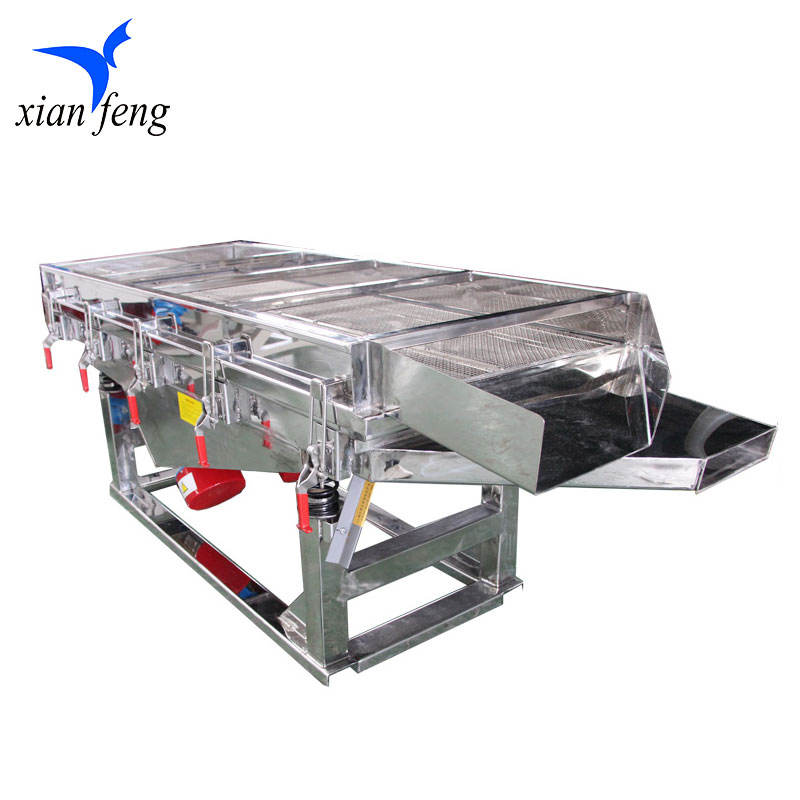
Xianfeng Coffee Beans Linear Vibrating Screening Sieve Machine
Model
Not specified
Supplier
Xinxiang Xianfeng Vibration Machinery Co., Ltd.
Type of seller
Custom Manufacturer
Suitable applications
A candidate for sieve-type is documented, but the normalized data does not specify the coffee stage. Request a test using your product and written confirmation of the application by criteria: size.
Editorial guideline PRECISION ROAST, compiled only according to the approved principle, the stage of coffee and the criteria for use; not the manufacturer's statement.
The principle of sorting
Screen-based
Principle at source
grading
Coffee stage
Not specified
Stage at source
coffee beans
Sorting criteria
Size
Criteria at source
grading
Throughput
10–10000 kg/h
Sensor technology
Not specified
Camera
Not specified
Channels / chutes
Not specified
Screen configuration
The direct title and structured product-name field explicitly identify a coffee-bean linear vibrating sieve. The supplier description states that single or multiple decks can grade materials; capacity was converted from 10 kg-10 tons/hour. The page lists an XFZ model family but exposes no selected model or model-specific power/dimensions. Image URLs were not retained; image rights were not assessed.
Number of screens
Not specified
Output size grades
Not specified
System of rejection
Not specified
Precision
Not specified
Feed type
Not specified
Air requirements
Not specified
Power
Not specified
Voltage
220 V or 380 V
Dimensions
Not specified
Weight
800 kg
Operators
Not specified
MOQ
1 set
Type of price
range
Evidence note
The direct title and structured product-name field explicitly identify a coffee-bean linear vibrating sieve. The supplier description states that single or multiple decks can grade materials; capacity was converted from 10 kg-10 tons/hour. The page lists an XFZ model family but exposes no selected model or model-specific power/dimensions. Image URLs were not retained; image rights were not assessed.
Declared range at the time of verification
US$4,285 for 1-2 sets; US$3,800 for 3 or more sets.
Are optical and color sorters different machines?+
In this section, these are synonyms of the same class: the system observes the grain with cameras or sensors and separates the particles according to a tuned optical feature.
Will a sized size graders remove the color defect?+
Only if the defect coincides by chance with the dimensional fraction being separated.Sito measures the passage through the hole, not the color, so you need optical control for color difference.
Can you compare cars to the maximum kg / h?+
Not without the same product and the same quality criteria. Match the steady flow with the purity of the accepted fraction, the omission of defects and the false selection of suitable grain.
Does a color sorter always require compressed air?+
For pneumatic cut models, yes, but the requirements are different: Ask for pressure, flow rate, air quality and system drawdown behavior; no field in the listing does not mean no requirement.
Where to put sorting in the production line?+
The position depends on the task. Green raw materials are usually tested before roasting, roasted after cooling; before and after the machine, you need a coordinated feed, accumulation, aspiration and safe discharge.
Put the sorting in full production flow
Coordinate feeding, air, aspiration, output fractions, accumulation, cleaning and locking prior to model selection.