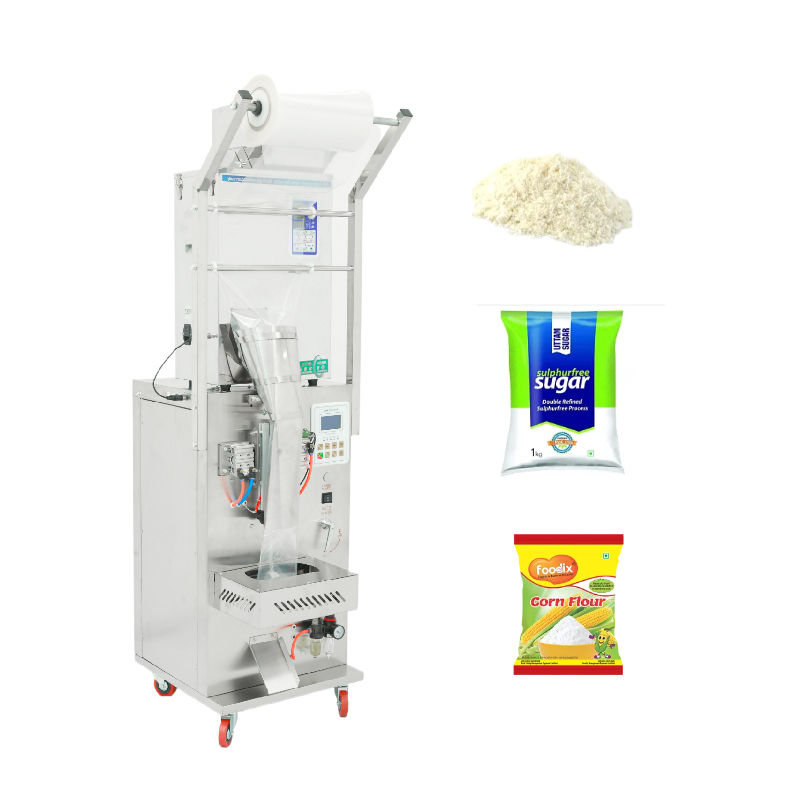
Calculation begins with suitable bags per shift and takes into account SKU, resetting, control and stops.
The maximum speed of the listing is only the upper limit for unknown conditions. The project requires a steady pace of the complete process: the available production time is divided by the required release, then each operation is checked on the real package and product.
FORMAT/MATERIAL
DOSE/SPEED
BUCKLING/CONTROL
01/technique
The maximum speed of the listing is only the upper limit for unknown conditions. The project requires a steady pace of the complete process: the available production time is divided by the required release, then each operation is checked on the real package and product.
For each SKU, divide the mass of the output by the net mass of the package. Add the volumes, add the process samples and the agreed reserve, without mixing the kilograms and the number of packages.
kilogram
net
shift-pack
02
2. Find the available time
The shift subtracts start-up, clean-up, change of materials, control, scheduled service and breaks, and the resulting window is the basis for a minimum steady pace.
minutes
readjustment
stopover
03
3. Check the bottleneck
Dosing, packet opening, gas, sealing, printing, and tapping all have different cycles, and line release is limited by the slowest stable buffer operation.
dose-cycle
packer-cycle
check-out
04
4. Perform the acceptance test
In advance, set the duration of the series, the product, the packaging, the permissible defect and the method of fixing the stops. Compare good packages during the test.
FAT/SAT
percentage
stopover
03/checklist
What to fix before requesting the supplier
01Calculate bags per shift for each SKU
02subtract
03consider the time of each adjustment
04compare cycles of dispenser, packer and control
05laying a reserve as an explicit assumption, not a promise
06confirm the result of a long test in a working format
01CATALOGUE/SUPPLIER DATA
Models for testing methodology
The listings help to apply a checklist to validated data, and the missing value remains unknown until the vendor responds.
Automatic Dual Chamber Brick Bag Coffee Vacuum Bag Forming Filling Packaging Machine
Model
KYV500N
Supplier
Anhui Koyo Machinery Co., Ltd.
Type of seller
Custom Manufacturer
Suitable applications
Candidate for a vacuum scenario; confirm the acceptable product, package shape and the effect of the mode on the finished coffee.
Editorial guideline PRECISION ROAST on the confirmed type of machine; not the statement of the manufacturer.
Type of machine
Vacuum packaging
Type at source
Automatic vacuum brick-bag form-fill-seal machine
Product
GROUND COFFEE
Product at source
Coffee powder in the supplier description; powder in structured attributes
POUCH FORMAT
Vacuum brick bag / six-side bag made from laminated roll film
Bag width
According to clients
Packet length
According to clients
Dose range
70 g-1 kg for KYV500N in the supplier technical table
Claimed productivity
18-20 bags/min for KYV500N in the technical table; selected variation says 20-40 bags/min
Automation
Automatic
Automation at source
Automatic; mechanical drive with PLC/servo controls
Nitrogen
Not specified by the supplier
Nitrogen at source
Not specified
DEGASSING VALVE
Not specified by the supplier
Valve at source
Not specified
Sealing
Inside-pumped vacuum, form, vacuum and reseal brick bag
Power
6.5 kW (8.72 hp) selected variation
Voltage
380 V
Dimensions
4500 x 950 x 2150 mm
Operators
Not specified
MOQ
1 set
Type of price
fixed
Claimed price at the time of inspection
US$65,000 USD
August 10, 2026
There are discrepancies in the listingThe title says dual chamber, but the supplier table distinguishes KYV500N at 18-20 bags/min from KYV500N2 with two alternating chambers at 38-40 bags/min. The selected KYV500N variation says 20-40 bags/min, conflicting with the model-specific 18-20 bags/min technical row. The page shows a 1500 kg machine but a 158 x 95 x 2185 cm, 68 kg shipping item; shipping values are not treated as machine weight or dimensions.
Candidate for a vacuum scenario; confirm the acceptable product, package shape and the effect of the mode on the finished coffee.
Editorial guideline PRECISION ROAST on the confirmed type of machine; not the statement of the manufacturer.
Type of machine
Vacuum packaging
Type at source
Automatic vacuum packing machine
Product
GROUND COFFEE
Product at source
Coffee powder; granule, powder and solid filling materials are listed
POUCH FORMAT
Brick vacuum bag; gusseted pillow, 3-side-seal and 4-side-seal bags are also listed
Bag width
40-200 mm
Packet length
60-200 mm
Dose range
250 g and 500 g configurations named in the title
Claimed productivity
25-40 bags/min in supplier attributes; selectable 15, 20, 25 or 40 bags/min variations
Automation
Automatic
Automation at source
Automatic; electric drive; eight working stations
Nitrogen
Not specified by the supplier
Nitrogen at source
Not specified
DEGASSING VALVE
Not specified by the supplier
Valve at source
Not specified
Sealing
Vacuum brick bag making; weighing, forming, packing and sealing
Power
1.5 kW selected variation
Voltage
220 V, 50/60 Hz
Dimensions
8800 x 3800 x 4000 mm
Operators
Not specified
MOQ
1 set
Type of price
Based on order quantity
Claimed price at the time of inspection
GBP 81,334.50 for 1-4 sets; GBP 73,872.62 for 5+ GBP
August 10, 2026
There are discrepancies in the listingThe card lists a 1500 kg machine and 8800 x 3800 x 4000 mm machine dimensions, but the shipping item is shown as 11 x 11 x 10 cm and 20 kg; shipping values are rejected as non-machine data. The speed appears as both a 25-40 bag/min supplier range and four selectable capacity values; both source wordings are retained.
There are discrepancies in the listingThe supplier dimension string has no unit, so millimetres were not inferred. The structured machine weight is 100 kg while a separate supplier field says 94 kg; weight is outside this research schema and neither is normalized.
Divide the required number of suitable packages by the available production minutes. Then add the agreed stock and check that the entire kit keeps that pace.
What availability factor to use?+
There's no universal norm. Before you have your own statistics, the coefficient is framed as an assumption and tested in multiple scenarios, rather than presented as a guaranteed result.
Why might the speed of the packer not coincide with the release of the line?+
The line is constrained by the dispenser, the feed, the gas, the marking, the control, the discharge and the stops, and the speed of one node does not describe the entire system.
Translate the method to the working specification
Set the product, package, dose, series, options and infrastructure, then test the models under the same conditions.